Singing in Tune (Yes, in middle school!)

by JoAnn Struck


The first few choir rehearsals are important in so many ways.  One of the first skills I teach is tuning.  If a choir doesn’t know what “in tune” sounds like they will never be able to understand it or recreate it.

For my middle school choirs, this is the procedure I follow for teaching basic in-tune singing in the first few rehearsals:

I first have to explain the mechanics of vocal production:

1. dropping the jaw-this can be done by putting two fingers (one on top of the other) and slipping it between their top and bottom teeth or when their jaw is dropped they can place their finger in the ‘hole’ next to their ear.  The hole only appears when the jaw is dropped.

2. lifting the soft palate- I have the students use their tongue to feel the roof of their mouth just behind their front teeth.  I explain that this is called the hard palate.  Next I ask them to use their tongue to feel the back part of the roof of their mouth.  They notice how soft and squishy it is and we talk about it being connected to the uvula.  Then I ask them to pretend to yawn (which always turns into a real yawn for them and me!) and ask them to describe to me what direction the soft palate moves.  Surprise!  It moves up!  Some teachers tell their young singers to “create space” in the back of their throat or “open the throat.”  Most students don’t know how to do this without some instruction.  I have found this little exercise makes much more sense to them and is quickly successful.

3.  Mouth shape - keeping the corners of their mouth from spreading.  I teach in Oklahoma and our school is very ethnically diverse.  So the singer “spread” is a daily battle.  I have my students start with singing while dropping the jaw, then experience what lifting the soft palate feels like (yawning), then paying attention to the shape of the mouth.

After some practice with the basic mechanics, then I choose a pitch I know most of my girls AND boys can sing…usually B or A below middle C.  It’s not necessary to have them sing with a lot of gusto at the beginning.  My goal for them is to experience singing in tune. 

We start by singing the vowel ooooo because it’s the easiest to tune.  The first time the students sing in unison, it’s pretty much all over the place.  The boys are still trying to find their voice, the girls are checking out the boys and there’s at least one student trying to read their book without me noticing.  You’ve got to love middle school!

As we they are singing I use motions to remind them about the three things they are focusing on in order to sing in tune.  I drop my jaw and run my hand down the jawline, for the soft palate I raise my hand up in the “la” position and for the mouth shape I ask them to sing as if they have a cheerio or life saver in their mouth and they are singing through the hole.   I stop them and explain to them that if EVERYONE is singing with the correct technique then they will be able to hear the pitch “straighten out.”  So we try again.  They sing the pitch until it becomes “in tune”, all the while I am using my motions to remind them of they things they need to do to make it “in tune.”  It usually takes a few seconds but it will finally get there.  We celebrate!  I say things like: “Did you hear that?  Did you hear how the pitch was all jumbled and ragged and then it straightened out and became smooth?”  They actually get excited!

I explain to them that the goal is to have that ‘jumbled’ time decrease each time they sing.  So we do it again…..and again….and again.  Unbelievably, after a few times, they can sing in tune, they can recognize what in-tune singing sound AND feels like. 

We have to do this process with each vowel sound because each vowel has it’s own shape and challenges.  Once the students have experienced the in-tune sound, then adapting it to the other vowel sounds goes very quickly.  Eventually we sing through all the vowels (on a single pitch, then changing pitches) without stopping to teach them to keep the mechanics in place as the vowels change.

I have found this process to be simple, quick and very successful for my middle school students.  Proper singing has many, many layers…..singing in tune is just one of them.

Very few, if any, of my students have the luxury of taking private voice lessons.  So my choral warm ups at the beginning of each rehearsal is a mini voice lesson.  What an opportunity for students to get this kind of instruction every single day!  So it’s important to make that time count! 


Here are a few of my favorite warm-up books.  They all include exercises in tuning as well as many other important vocal techniques. 

The Complete Choral Warm Up book - Robinson & Althouse

The Choral Warm Up Collection - Albrect

Building Beautiful Voices - Nesheim & Noble


JoAnn Struck has begun her 33rd year of teaching music in the public schools.  She has taught music for K-12th grade and has spent the last 25ish years teaching middle school choir at Capps Middle School in the Putnam City School District in Oklahoma City, OK.  She earned her B.M.E from Southern Nazarene University and her M.A in Choral Conducting from the Conservatory of Music at the University of Missouri-Kansas City.  She continues to question her sanity but truly loves teaching middle school.  She can be reached at jstruck@putnamcityschools.org


OH, MY ACHING BUM!  [musings of an elementary music teacher]

by Leslie Cannata Nance

OH, MY ACHING BUM! 

Many of you reading this are probably in the same position I am: a public school teacher. If you’re not, you probably have been or you’re thinking about it. Or, you may be reading this just to get a little advice on restarting that engine that got you interested in any type of teaching in the first place. Am I right? Well, if I’m not, you don’t have to keep reading, but I encourage you to do so.

At the beginning of every school year, teachers old and young are asked to sit in the same uncomfortable chairs that our students sit in ALL DAY LONG. If you’re like me you’re thinking, “This sitting all day is the absolute WORST thing about these sessions! Oh, my aching bum!”

So.

Are you expecting your students to do the same thing?

I have no chairs in my music classroom. My students sit in militant and perfectly straight lines measured by magnets on the ceiling spots in the room, where I can have my eyes on them at all times.

Did I mention I teach on a campus where most students don’t eat dinner the night before or are putting themselves to bed at 11:00 p.m. and are being dropped off at daycare at 6:00 a.m.?

I am very serious about my seating arrangements. I guess it should be noted that I have 55 of them at a time, so a little radical organization is imperative to a smooth running classroom. My desk... well, that’s another story…

I see kindergarten through fifth grade every single day; they all come in the room and, after getting a pump of hand sanitizer (did I tell you I’m also a bit of a germ freak??), they all look up at that ceiling and line themselves up accordingly, spread evenly and perfectly across my classroom, legs crossed with their hands in their laps.

It’s actually quite a glorious sight.

*sidenote* If you can get 5-year-olds to sit correctly in your classroom, you can do ANYTHING.

But do I expect them to stay there the entire 55 minutes? I, as a gracefully aging 29-plus-year-old, can’t even sit still for 10 minutes! As I write this, I have moved from 3 different positions - sitting, standing, and walking.

Whether you’re teaching writing, orchestra, private piano, or 55 kindergarteners in general music - those kids have got to get up every once in awhile and have the freedom to MOVE!

Teach them proper transitions, give them seating charts, go over those ways to get in line appropriately...but let them move. Let them stand, let them straighten their legs, let them stretch, let them walk, let them dance, let them jump.

By the way, when you’re in those trainings, you’ll get more out of them if you move, as well. Try it. I guarantee it works.

How much more will your students get if you allow them to do the same?


Leslie Cannata Nance has been performing since she was a small child. With dedication and a lot of hard work, Leslie was given full scholarships to several universities to study music education. Leslie truly lives out her dream job every single day teaching children the love of music and performance. Leslie was hired before her college graduation in Pasadena Independent School District at Richey Elementary School as the Music Coordinator and Choral Director. Here, Leslie was awarded First Year Teacher of the Year. After a move to north Houston in 2009, she became the Music Coordinator and Choral Director at McFee Elementary School in Cypress-Fairbanks Independent School District. At McFee, Leslie revolutionized the music department, as she was the third music teacher hired when the school had been opened for only two years. Leslie gives every student in her classroom the opportunity to perform, as she feels this is one of the most important aspects of elementary music education. When Leslie is not teaching public school, she spends her time teaching private voice, piano, strings, and drama. Leslie welcomes your questions and comments and has many resources she wants to share with you for free (including original musicals)! She can be contacted by email at leslie.nance@cfisd.net or  at Facebook.com/mcfeefape

Composition in the Traditional Piano Lesson

by Kimberly Arnold


Teaching composition in the traditional piano lesson setting has been a struggle for many teachers over the years. Oftentimes our schedules during the school year do not allow for “extra” work other than preparation for recitals and contests. However, composition plays an important role for many students in piano lessons. By allowing a student the freedom to create his or her own personal expression of music, we are fostering the student’s ability to be creative and allowing them to expand their knowledge in a different format.

Composition is helpful for many students:

-the dreamer student with ADD

-the student that is struggling emotionally and needs to find an expression of the emotions inside them

-the student that only plays classical music and needs to become more comfortable with ear-training

It has been my experience that students enjoy writing their own music, but they need direction and a catalyst to get them started. Here are some tips that I have found to be helpful in my own studio:

-discuss major and minor keys (do they want their song to sound happy or spooky?)

-write 1-4 measures together and then have them continue on their own either through variation form, repetition, sequencing, or through-composed

-Utilize a series of piano composition books such as Wynn-Anne Rossi’s “Creative Composition Toolbox”

Beginner students will not know how to write in notation form, so it is typically best to give them a piece of notebook paper and turn it sideways. Draw a horizontal line across the length of the paper which will denote Middle C. Then the student can compose based on mapping rather than notation. It would look something like this:

                ----                                       ---------                                                            ----      ----

---       ----        ---                    ----------                                                 --------     -----

C___--_________-----------------_____________------___________________________----_____                                                             ---------                                    ------------

                                                                                    ----------                                               ---------

When they bring their composition to their next lesson, you can help by quickly charting it on staff paper to help them to keep consistency in their practice and performance.

Elementary students can use basic notation form with some reminders from you along the way. They typically need reminders of writing clefs, brackets, key signatures, etc. but usually have success in writing in standard notation form. Elementary students tend to do well with descriptive songs, so guiding them to write about personal experiences such as nature hikes, airplane rides, vacations, or any other adventures that they enjoyed is always a good place to start. Elementary students may find it difficult to write for both hands, so I often allow them to write a melody and if they want any accompaniment, I will help them. We will add whole notes or chords and keep the accompaniment simple.

Intermediate students that have never composed before may find it awkward to begin composing at first, but typically they settle into it and enjoy expressing their ideas on paper. Intermediate students have more success with writing for both hands, and they can even add other instruments from their experience in other music settings.

Once your students have composed a piece, allow them a venue in which they can perform their masterpiece. Having a recital dedicated solely to original compositions can help alleviate any insecurities about performing their piece for others. Everyone will be in the same boat...and what an exciting recital it will be!


 Check it out: Creative Composition Notebook


***************************

Kimberly Arnold has taught private piano for over eighteen years and has taught in the music classroom from preschool through college. She currently resides in Oklahoma City where she teaches privately and at Mid-America Christian University. Kimberly holds a Bachelor of Science degree in Piano Performance from Southern Nazarene University and Master of Music in Music History from the University of Oklahoma. She can be reached at KimArnold78@gmail.com

How Have the Arts Shaped You?

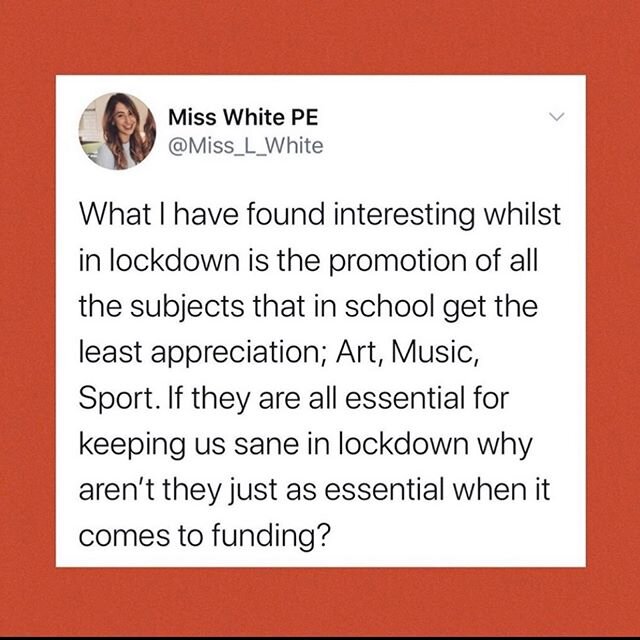
With all the experiences, research, and information we have to prove that quality arts programs in schools have various positive impacts on student achievement, school culture, community, and personal development, it baffles me that we are still fighting this battle. I've never heard one person complain about having had to study the arts in schools, yet we constantly battle to gain equal footing among other content areas in the school schedule.

Back in January 2017, PBS News Hour did a story on the Turnaround Arts program at ReNEW Cultural Arts Academy in New Orleans, LA. I’m provided tremendous hope in knowing that there are so many that understand arts education as an integral and important part of the learning process. A quality arts education program for every child should be a right, not a luxury for the privileged few who can afford it.

As multiple award-winning actress Alfre Woodard beautifully states in this piece, “Art completes not only the education, but it completes the human being.” How does art complete you? What experiences, in and with the arts, have shape who you’ve beome?

The ARTS are CORE!

-Jerry Phelps